Triturus dobrogicus
About
General
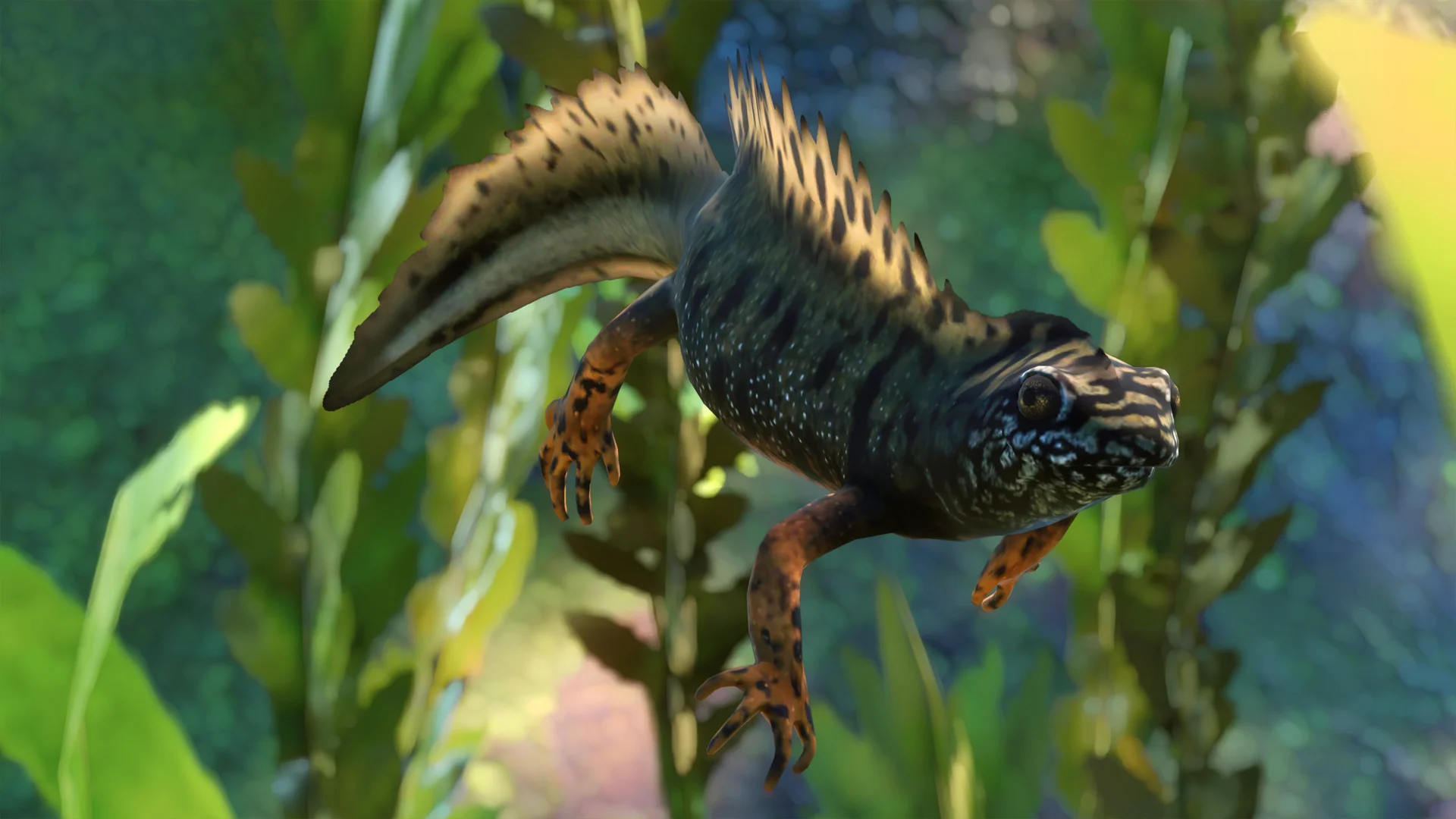
The Danube crested newt (or Triturus dobrogicus) is an amphibian species living in the slow-flowing waters, tributaries and surrounding woodlands of the Danube River.
The sides and back of the newts are covered in black and brown skin with white and black mottling, while their belly and throat are coloured bright red and orange with dark patterns.
As with all crested newts, the species expresses sexual dimorphism where males have a distinctive spiked crest running down the length of their spine during breeding season. Male newts are 13cm to 15cm long, females are slightly larger measuring up to 18cm in length.
Conservation Status
Assessed as Least Concern, the Danube crested newt is still in decline and threatened by habitat loss. Wetland drainage, pollution and damming, as well as aridification as a consequence of climate change destroy suitable habitat for these amphibians. Like other salamanders, the Danube crested newt is potentially at risk of Bsal (Batrachochytrium salamandrivorans) infections, a relatively new fungus that is extremely lethal, though it is not yet present in this newt's natural range.
Several areas within the Danube crested newt's habitat are covered by established protected areas. Ongoing protection of wetland habitats is the primary focus to help this and other newt species survive. Translocations from threatened water bodies can bolster weak or save threatened populations. While Bsal is not currently active in Danube crested newt's range, an action plan for its management on an EU-wide scale is urgently requested by conservationists to manage outbreaks and keep salamander species from extinction in the future.
Social & Reproduction
Danube crested newts do not have specific social requirements and mainly live solitarily. Provided there is enough space and food, they tolerate other individuals nearby.
Danube crested newts move to breeding areas from February to March, stretches of slow-moving or still water close to where they themselves hatched. Males track females and engage in a courtship display, involving tail movements and lashes, arching of the back and crest waving. After a successful mating ritual, the male deposits a spermatophore on the ground for the female, who will accept it into her cloaca to fertilise her eggs internally.
Several days later, she will lay eggs onto the leaves of aquatic plants, folding them around the eggs to protect them. Over 2 weeks she will lay around 200 eggs this way. 2 to 3 weeks later the larvae will hatch from the eggs. They will remain in their aquatic larval form for 2 to 4 months before metamorphosing.
Having metamorphosed into their adult form, the newts will move to sheltered, damp areas on land, usually in nearby woodland. They reach sexual maturity at the age of 2 to 3 years old, and will breed once per year during their aquatic phase.
Habitat
Social
Biology
 15 cm
15 cm 18 cm
18 cm